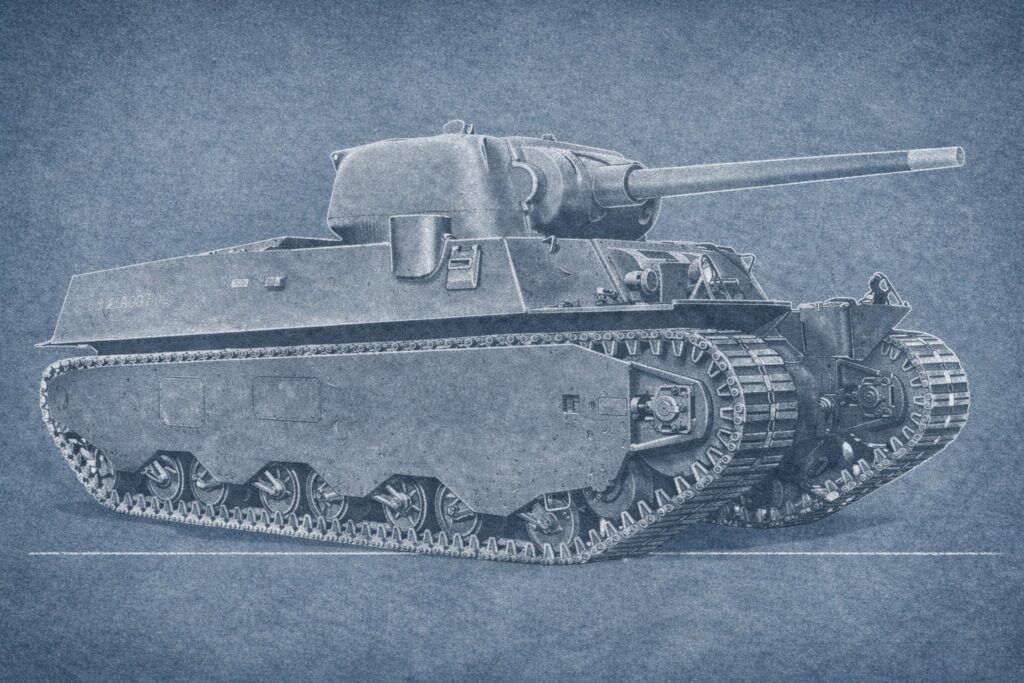
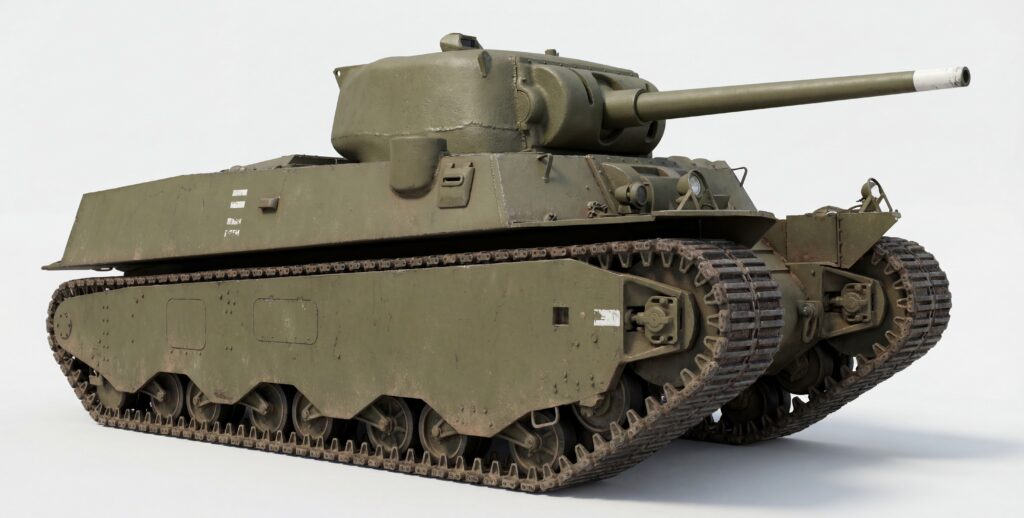
Following the outbreak of World War II in 1939, the United States renewed its interest in heavy tank development to address the lack of armored vehicles capable of countering reported German heavy tanks.
Initially proposed in May 1940 as a multi-turreted 50-ton vehicle, the design specifications were revised by late 1940 into a single-turret model featuring a dual armament of a 3-inch gun and a 37 mm coaxial gun.
Baldwin Locomotive Works produced the pilot model, designated the T1E2, which was standardized in May 1942 as the M6 (cast hull) and M6A1 (welded hull), alongside the electric-drive T1E1 variant.
However, the program faced significant challenges, including transmission failures, braking issues, and a rushed production schedule that bypassed necessary testing protocols.
By late 1942, the Armored Force, led by General Jacob Devers, deemed the vehicle tactically useless due to its excessive weight and logistical burden, preferring lighter medium tanks. Consequently, production was capped at just 40 units plus pilots, and while the chassis served as a testbed for components like the 90 mm gun and the 105 mm-armed M6A2E1, the fleet was ultimately retired and mostly scrapped by the 1950s.
.
Leave a Reply